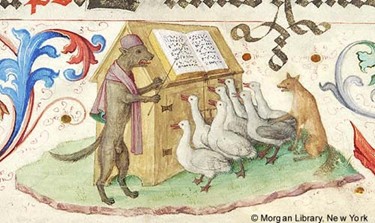
'They chaunt so together that they make but one voice': Chant Workshop
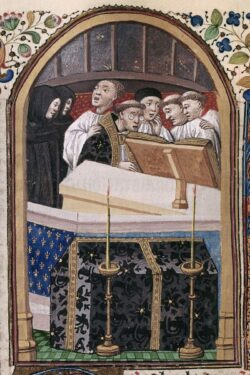
When: Tuesday 07 July, 19.00-20.30
Where: Michael Sadler Building: LG.10
Open to: IMC Delegates
Price: Free
How to Book: No Booking Required, Free of Charge
Directed by Anna de Bakker and Debra Lacoste
In this workshop, participants will join Digital Analysis of Chant Transmission (DACT) researchers in learning and singing excerpts from the Office for All Saints. The organisers will explain the basic principles of chant notation and the practicalities of what is written - and unwritten - in chant manuscripts; they will also introduce a particular manuscript (a fragmentary Sarum antiphoner at McGill University) and its relevance to the wider project of studying chant transmission. Following this, the manuscript pages will be projected for all to see, and attendees/participants will have the experience of singing from it. This session is open to all who would like to try singing from the original source material of plainchant, or to experience first-hand an auditory slice of the medieval church year. Participants will get first-hand experience in the challenges of interpreting and singing square notation. The ability to read music is helpful but not necessary; this session is also open to those who would just like to watch and listen.
The chant workshop leaders, Anna de Bakker and Debra Lacoste from DACT, have also organised a free chant SoundWalk, which can be experienced asynchronously throughout the conference (though workshop attendees may wish to begin it right away). In the SoundWalk, posters of fragmented chant manuscripts are placed around campus, and participants may download the DACT app on their phones in order to hear the chant presented as they approach the poster as detected through an iBeacon or GPS location. (Click 'yes' for updates within the app after downloading.) The posters will be in the green space behind Stage@leeds/LUU, with the first one located just over the bridge from Old Bar.
DACT is a partnership project funded by the Canadian Social Sciences and Humanities Research Council (SSHRC). It aims to extend the study of the dissemination of plainchant from localised research focussed mostly on Europe and the Middle Ages to global research tracing transmission to other continents through to the modern era. Understanding how chant travelled and adapted over time and place through oral and written traditions is important for what it can tell us about the communication of culture through the encounters of people and ideas. However, data management when dealing with a thousand years of music is a major obstacle. To address this problem, DACT is mobilising a large network of people and projects to analyse chant repertories digitally and to develop new computational resources in tandem with existing chant databases and digital repositories of manuscripts.